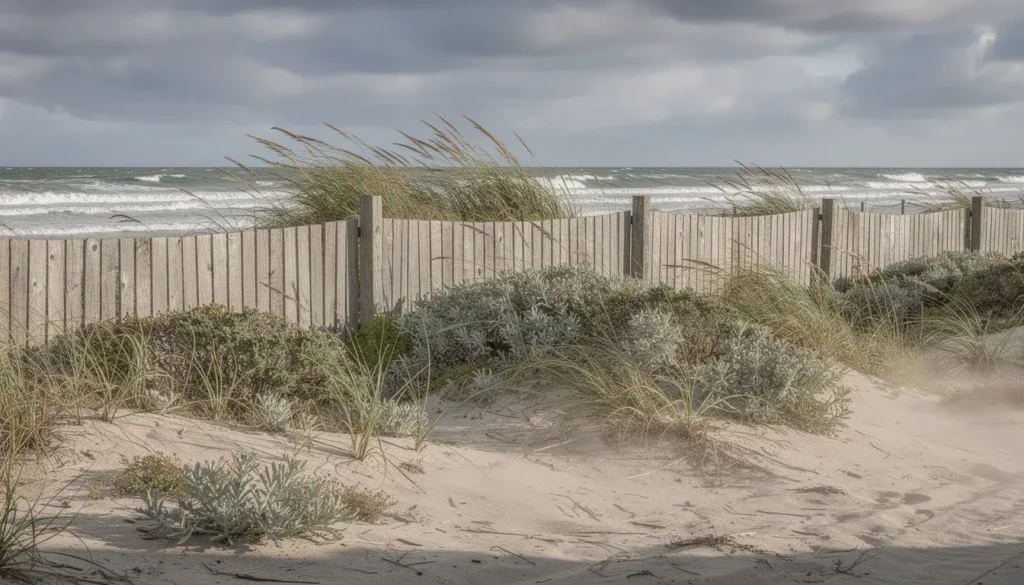
Welcome to our comprehensive guide on fencing material comparison Kapiti! Whether you’re a homeowner, property manager, or developer in the beautiful Kapiti Coast region, you’re in the right place to discover the best fencing options tailored to coastal conditions. Our expert insights will help you navigate the unique challenges posed by salt air, strong winds, and local regulations, ensuring your fence not only enhances your property’s security and privacy but also adds lasting curb appeal. Explore a wide range of materials—from timber and aluminium to composite and PVC—and learn how to choose the right fence that combines durability, aesthetics, and minimal maintenance for your outdoor spaces. Let’s get started on creating the perfect fencing solution for your Kapiti property!
Table of Contents
Key Takeaways
- Kapiti’s coastal climate—salt air, strong winds, and intense UV exposure—makes material choice critical for any new fence in 2026 and beyond.
- The most common fencing materials in Kapiti are timber, aluminium, Colorsteel/Colorbond-style steel, PVC, composite (WPC), and chain link, each with clear pros and cons for coastal conditions.
- Timber remains the most popular option for privacy and aesthetic appeal, while aluminium and Colorsteel perform best for low maintenance coastal durability.
- Upfront fencing costs are only part of the equation in Kapiti; long-term maintenance requirements and lifespan often matter more than saving a few dollars per metre.
- This article provides Kapiti-specific guidance covering wind exposure, salt spray, local regulations, typical 2026–2027 New Zealand price ranges, and a comprehensive FAQ.
Fencing in Kapiti: Why Material Choice Matters on the Coast
The Kapiti Coast stretches from Paekākāriki in the south through to Ōtaki in the north, encompassing everything from beachfront sections to suburban streets and semi-rural lifestyle blocks. This diversity means many homeowners face unique challenges when planning a fence project for their property boundaries.
Understanding local weather conditions is essential before selecting different fencing materials for your property:
- Prevailing winds: Strong nor’westers and southerlies regularly test fence structures, requiring robust posts and bracing
- Salt-laden air: Properties within 1–2 kilometres of the beach experience accelerated corrosion on unprotected metals and faster decay in untreated timber
- High UV exposure: New Zealand’s intense sunlight fades paint and degrades synthetic materials faster than many homeowners expect
- Varied soil types: Sandy soils near Raumati and Paraparaumu Beach drain differently than heavier clay soils found inland around Waikanae
These conditions mean a material that performs well in sheltered Wellington suburbs may deteriorate rapidly on an exposed Kapiti section. A fence that works perfectly in the Hutt Valley could require replacement years earlier if installed near the beach at Raumati.
Choosing the right fencing material can reduce 10–15 years of maintenance costs, eliminate repainting hassles, and prevent premature replacement. For many Kapiti property owners, spending more upfront on quality fencing solutions delivers significant long-term savings.
Key Factors to Compare Fencing Materials in Kapiti
Before diving into specific materials, it helps to establish the criteria for comparison. These factors will guide how each fencing option stacks up for residential and commercial properties across the Kapiti Coast.
- Durability: How each material copes with wind loads, salt spray, and UV exposure. Galvanised finishes offer baseline protection, while powder-coated aluminium and marine-grade treatments provide enhanced corrosion resistance for beachfront locations.
- Privacy and security: Solid panels (timber, Colorsteel, PVC, composite) provide maximum privacy and contribute to your home’s security. Open styles like aluminium slats, steel bars, and chain link offer visibility and airflow but less seclusion.
- Maintenance requirements: Timber demands painting, staining, or oiling every 3–5 years. Metal fences need periodic washing to remove salt deposits. Composite materials and vinyl fencing offer minimal maintenance over their 20–30 year lifespan.
- Budget considerations: Typical 2026–2027 NZ prices vary considerably:
- Timber pailing: approximately $75–$130 per metre installed
- Colorsteel panels: approximately $150–$250 per metre installed
- Aluminium slat or balustrade: approximately $180–$300 per metre installed
- Council and boundary considerations: In most Kapiti residential zones, boundary fences up to 2.0–2.1 metres generally don’t require building consent. However, readers should confirm current requirements with Kapiti Coast District Council, particularly for pool fencing, retaining walls, or taller fences near roads.
These factors will be referenced throughout each material-specific section below, helping you identify the right fence for your situation.
Timber Fencing in Kapiti: Classic Look, Careful Material Choice
Timber fencing remains the most common choice across Kapiti suburbs like Paraparaumu, Waikanae, and Ōtaki. Many homeowners appreciate how wooden fences offer natural warmth and easy customisation at accessible price points.
Common timber options available locally include:
- Treated pine: The cost effective workhorse, with treated pine costing approximately $25–$35 per linear metre for materials alone. Pressure treatment helps resist decay and insect damage.
- Higher-grade pine: Better appearance and durability than budget options, suitable for visible front boundaries.
- Macrocarpa and cedar: Premium species that add curb appeal and naturally resist rot without heavy chemical treatment. Cedar commands $50–$70 per linear metre.
Pros of timber fencing:
- Natural appearance that suits coastal gardens and traditional New Zealand homes
- Easy to customise height and style (pailing, board-on-board, horizontal slats)
- Quick to repair individual boards when damage occurs
- Custom fencing solutions are readily achievable with basic carpentry skills
Cons of timber fencing:
- Risk of rot at ground level, especially in poorly draining sandy soils
- Warping and splitting from strong nor’westers and temperature fluctuations
- Ongoing need for painting or staining every 3–5 years in coastal locations
- Posts can shift if not properly set in concrete footings
Lifespan in Kapiti conditions: Budget treated pine typically lasts 15–20 years with proper maintenance. Higher-grade timber can reach 20–25+ years when posts and rails receive appropriate treatment and installation.
For best results with timber fences in coastal Kapiti:
- Use H4/H5 treated posts rated for ground contact
- Set posts at least 600mm deep in concrete footings with adequate drainage
- Install capping rails to protect exposed end grain on pailings
- Specify stainless steel or hot-dip galvanised fixings—standard zinc-plated screws corrode quickly near the beach
- Apply protective coatings within the first year and maintain every 3–5 years
Example scenario: A typical 30-metre timber pailing fence around a Paraparaumu section might cost $2,400–$3,900 installed. Add $300–$500 for initial staining, plus $200–$400 every few years for restaining. Over 15 years, the total cost approaches $4,500–$6,000 when accounting for proper maintenance and occasional fence repairs.
While timber has the lowest upfront cost, lifetime cost can exceed alternatives when factoring in maintenance and potential storm damage repairs.
Colorsteel and Colorbond-Style Steel Fencing: Strong, Private, and Coastal-Tough
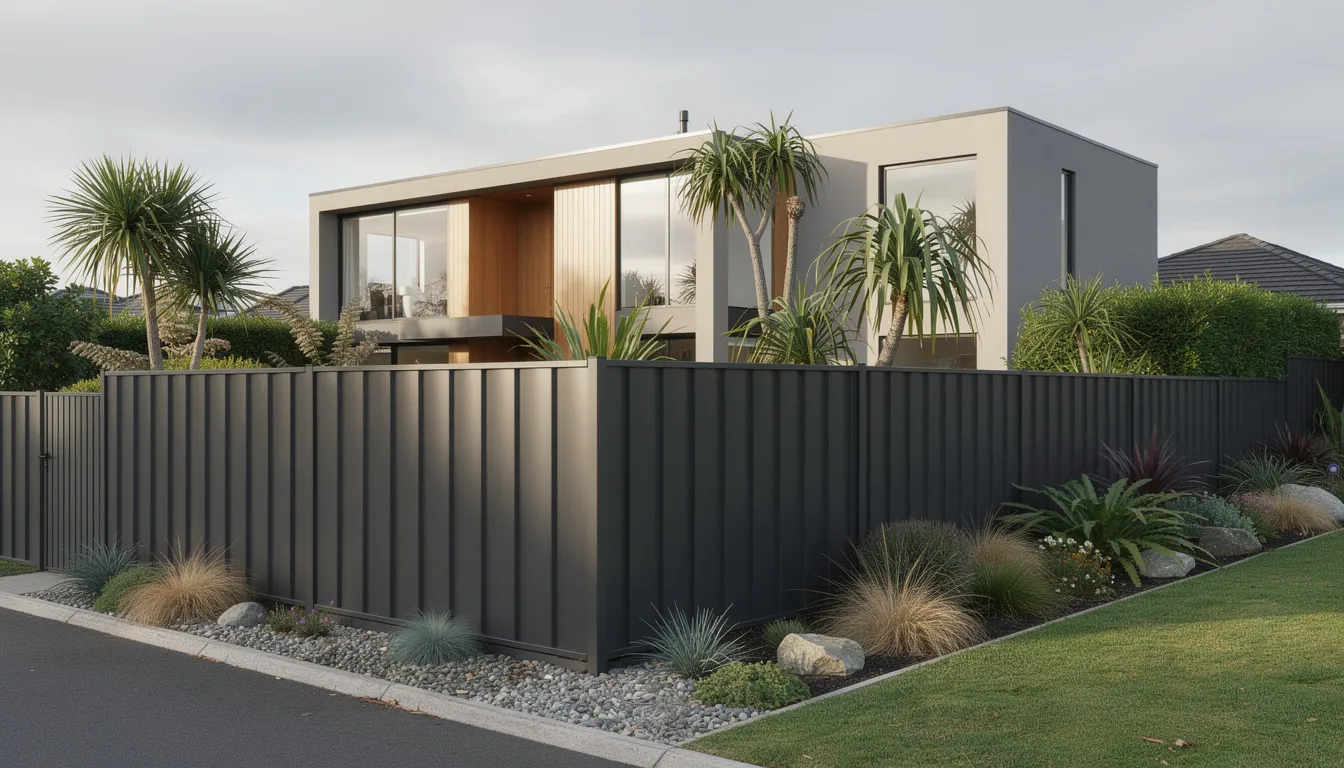
Pre-painted steel panel fencing—commonly sold under brands like Colorsteel in New Zealand or Colorbond in Australia—has become increasingly popular in newer Kapiti subdivisions. You’ll spot these metal fence installations throughout Waikanae North, Kena Kena, and recent Paraparaumu developments.
These fences consist of profiled steel sheets fixed into steel posts and rails, creating a solid, weather resistant barrier that handles Kapiti’s conditions well.
Pros of steel panel fencing:
- Excellent privacy and wind resistance when properly braced
- Factory-applied paint finish that lasts decades without repainting
- Wide colour range to match rooflines, joinery, and contemporary home design
- Very low maintenance for day-to-day upkeep
- Fire resistant—a consideration for properties near bush
Cons of steel panel fencing:
- Higher upfront cost than basic timber—typically $150–$250 per metre installed
- Less natural aesthetic that may feel “urban” in rural or traditional settings
- Can catch strong winds if not engineered correctly on exposed coastal sites
- Scratches or damage to the coating can lead to localised rust if not addressed
Performance in Kapiti’s coastal air: Modern Colorsteel products are designed for New Zealand conditions, but properties within a few hundred metres of the beach benefit from regular fresh-water hosing to wash off salt deposits. This simple maintenance step preserves the finish and prevents corrosion at edges and fixings.
Lifespan: Expect 20–30+ years for high quality materials installed correctly, with minimal risk of rot or insect damage—issues that plague timber alternatives.
Cost positioning: Steel panels typically run $150–$250 per metre installed, sitting above basic timber but often cheaper than high-spec aluminium slat systems on a per-metre basis. The lack of repainting requirements means total cost over 25 years often comes in lower than timber.
Steel panel fencing suits suburban sections where homeowners want a low maintenance, modern privacy fence. It integrates well with matching gates, including automated driveway entrances for enhanced security fencing.
Aluminium Fencing and Gates in Kapiti: Low-Maintenance Coastal Performer
Aluminum fencing represents a premium option widely used across Kapiti for pool fencing, louvre gates, balustrades on decks, and front boundaries in areas like Raumati Beach and Waikanae Beach where salt exposure is highest.
Pros of aluminium fencing:
- Highly rust resistant even in salty air—unlike wood or steel, aluminium won’t corrode
- Lightweight yet strong, making fence installation easier on sandy or difficult terrain
- Available in slat, louvre, and balustrade styles to suit various aesthetic preferences
- Ideal for automated driveway gates and sliding entries due to lower weight
- Powder-coated finishes in colours like black, charcoal, grey, and white suit coastal architecture
Cons of aluminium fencing:
- Offers less inherent privacy unless slats are closely spaced
- Higher upfront cost than standard timber or chain link—typically $90–$150 per metre for materials, or $180–$300 per metre installed for slat systems
- Requires accurate installation for smooth sliding or swinging gate operation
Typical applications in Kapiti:
- Pool fencing compliant with NZ pool barriers requirements
- Front boundary fences balancing visibility and home’s security
- Modern horizontal slat designs complementing contemporary homes
- Black metal fences providing sleek aesthetics on beachfront properties
Finish quality matters: Powder-coated aluminium resists fading and maintains appearance for extended periods. For properties directly exposed to salt spray, marine-grade aluminium or enhanced coating systems provide additional protection.
Lifespan: 25–30+ years in Kapiti coastal conditions with minimal upkeep—mainly periodic washing with fresh water to remove salt buildup.
Cost comparison: While aluminium has a higher upfront cost, it requires almost no repainting or rust treatment compared with steel bar fences or wrought iron. For coastal homes within a few hundred metres of the beach, aluminium often delivers the best lifecycle value among metal options.
PVC and Composite (WPC) Fencing in Kapiti: Emerging Low-Maintenance Options
PVC fencing and WPC (wood-plastic composite) fencing represent newer fencing options in Kapiti, growing in popularity among homeowners seeking low maintenance materials and a consistent, modern appearance.
PVC fencing explained:
- Hollow or reinforced plastic panels
- Smooth finish available in colours like white and grey
- Resistant to rot and insects—unlike wood, PVC won’t decay
- May be more susceptible to impact damage than timber or metal
Composite fencing explained:
- Boards made from recycled plastic and recycled wood fibers
- Solid and heavier than PVC with timber-like texture
- Improved resistance to rot and warping compared with traditional wood
- Often manufactured from recycled materials, offering an eco-friendly choice
Pros of both options:
- Require no painting or staining—just occasional washing
- Resist moisture penetration and maintain colour reasonably well under Kapiti’s strong sun
- Minimal upkeep over 20+ year lifespans
- PVC fencing offers smooth surfaces easy to clean
Cons to consider:
- Higher upfront cost than most timber fencing
- Limited colour ranges compared with painting timber
- PVC can become brittle with age, particularly in areas of extreme temperature variation
- Composite materials can fade slightly during the first 1–2 years before stabilising
- Heavier composite panels require careful installation planning
Suitability for Kapiti: These synthetic materials work well for mid- to high-end homes where owners prefer avoiding timber maintenance. They perform particularly well slightly inland where direct salt exposure is lower, though quality materials handle beachfront conditions reasonably well.
Expected lifespans: Composite fencing around 25–30+ years, quality PVC similar, both with relatively low maintenance commitments compared with timber alternatives.
| Material | Upfront Cost/m | Maintenance | Lifespan | Best For |
|---|---|---|---|---|
| PVC | $100–$200 | Very low | 20–30 years | Modern aesthetics, no painting |
| Composite | $120–$220 | Very low | 25–30 years | Timber look without maintenance |
| Timber | $75–$130 | Medium-high | 15–25 years | Budget, customisation |
For a modern Kapiti subdivision home, composite fencing offers the aesthetic appeal of timber with substantially lower lifecycle costs once you factor in staining, repainting, and storm repairs avoided.
Chain Link, Wire, and Rural-Style Fencing Around Kapiti
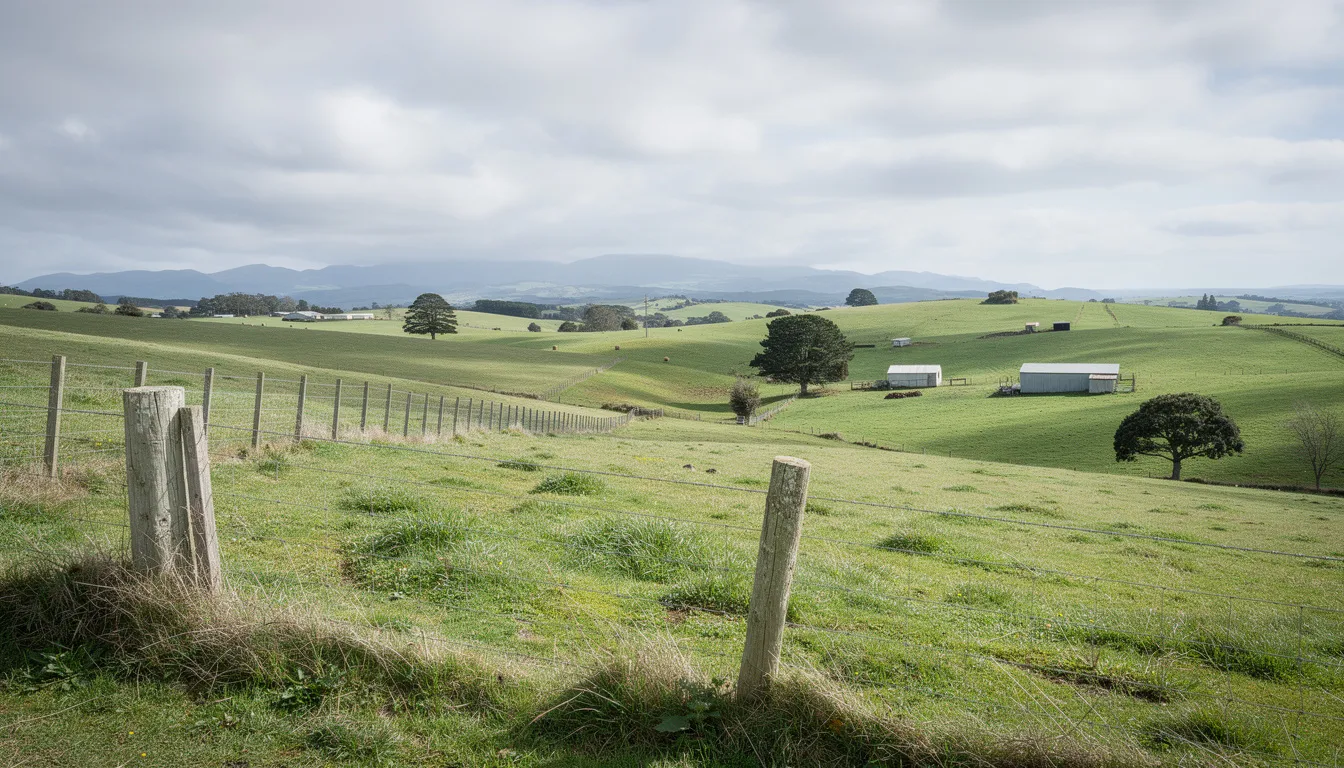
Not all Kapiti properties are suburban quarter-acre sections. Lifestyle blocks and rural boundaries around Ōtaki, Te Horo, and inland Waikanae often require different fencing approaches where chain link fencing and wire options make practical sense.
Chain link fencing characteristics:
- Cost effective for long runs—often $40–$80 per metre installed
- Durable galvanised coating resists rust in most conditions
- Suitable for commercial properties, sports areas, dog runs, and back boundaries
- Minimal privacy but excellent visibility and airflow
Farm-style post-and-wire or post-and-batten:
- Ideal for stock containment and large property boundaries
- Very low material cost per metre
- Less secure for pets and children than solid residential fences
- Quick to install across challenging terrain
Pros of rural-style fencing:
- Very economical for long boundaries spanning hundreds of metres
- Good airflow in windy paddocks reduces wind loading on posts
- Less visual obstruction of views across the Kapiti Coast landscape
- Simple to maintain and repair
Cons:
- Almost no privacy—unsuitable for residential streetscapes
- Limited aesthetic appeal in suburban contexts
- Potential rust in chain link if protective coatings are damaged in coastal settings
- Requires more substantial posts and bracing in exposed locations
Kapiti-specific recommendations:
- Specify higher-spec galvanising or PVC-coated mesh for properties near the coast
- Combine chain link with hedging for semi-rural properties wanting some privacy
- Use steel or timber posts with H5 treatment for ground contact in coastal areas
For lifestyle block owners balancing rural practicality with outdoor spaces around the home, a common solution combines economical wire fencing on distant boundaries with timber, Colorsteel, or aluminium around the house, driveway, and garden areas.
Kapiti-Specific Cost, Maintenance, and Longevity Comparison
Understanding fencing costs means looking beyond the initial quote. This section summarises how major materials compare over time in Kapiti’s demanding coastal environment.
| Material | Installed Cost/m | Typical Lifespan | Maintenance Frequency | Privacy Level |
|---|---|---|---|---|
| Treated Pine Timber | $75–$130 | 15–20 years | Every 3–5 years (stain/paint) | High |
| Cedar Timber | $120–$180 | 20–25 years | Every 5–7 years | High |
| Colorsteel Panels | $150–$250 | 25–30+ years | Annual wash | High |
| Aluminium Slat | $180–$300 | 25–30+ years | Annual wash | Medium-High |
| PVC | $100–$200 | 20–30 years | Annual wash | High |
| Composite | $120–$220 | 25–30+ years | Annual wash | High |
| Chain Link | $40–$80 | 15–25 years | Occasional inspection | Low |
Realistic scenario 1: A 30-metre boundary fence in Paraparaumu Beach
- Timber option: $3,000 initial install + $500 staining + $3,000 maintenance over 15 years + $1,500 repairs = approximately $8,000 total cost over 15 years
- Colorsteel option: $5,500 initial install + $300 washing supplies over 25 years = approximately $5,800 total cost, lasting 10 years longer
Realistic scenario 2: A Waikanae family choosing pool fencing
- Aluminium pool fencing at $250/m provides compliant barriers requiring minimal upkeep
- Timber pool fencing at $150/m needs regular staining and may require replacement in 15–20 years
Hidden costs common in Kapiti:
- Replacing rotted timber posts: $150–$300 per post including labour costs
- Repainting due to salt exposure: $15–$25 per metre every 4–5 years
- Wind repairs after storms: $200–$800 depending on damage extent
- Corrosion repairs on cheaper metal products: often requires entire fence replacement
When fencing contractors provide quotes, ask about material quality, guarantee terms, and what maintenance the quote assumes. A slightly higher price from a local contractor using high quality materials often delivers better value than the cheapest option available.
Which Fencing Material is Best for Your Kapiti Property?
There’s no one-size-fits-all answer. The best fencing material depends on your location, property type, and priorities around privacy, budget, and willingness to perform proper maintenance.
For beachfront or highly exposed coastal properties (Raumati Beach, Paekākāriki, Waikanae Beach): Favour aluminium, Colorsteel, or high-quality composite fencing over basic timber. The additional upfront investment pays off through dramatically reduced maintenance and longer lifespan in salt-laden conditions. These low maintenance materials withstand harsh weather conditions that quickly degrade traditional wood options.
For standard suburban sections (Paraparaumu, inland Waikanae, Ōtaki township): Timber pailing remains a cost effective option for many homeowners wanting custom fences at accessible prices. Those prioritising minimal maintenance and modern aesthetics should consider Colorsteel, PVC, or composite alternatives.
For rural and lifestyle blocks (Te Horo, inland Ōtaki, Waikanae countryside): Post-and-wire or chain link works well for large property boundaries. Complement these with timber, Colorsteel, or aluminium around the house, driveway, and garden outdoor spaces where privacy and appearance matter more.
Planning for the future: Factor in future plans when selecting materials. If you’re considering extensions, decks, pools, or pets, choose fencing that integrates with gates, balustrades, retaining walls, and potential security fencing additions later.
The smartest approach? Get a site-specific quote from reliable fencing services in Kapiti. Local fencing companies understand the soil conditions, wind patterns, and council rules specific to your area. They can recommend quality fencing solutions tailored to your section rather than generic advice that doesn’t account for Kapiti’s unique coastal challenges.
Frequently Asked Questions About Fencing Materials in Kapiti
What fencing material lasts the longest in Kapiti’s coastal climate?
Aluminium, Colorsteel-style steel panels, and quality composite fencing typically offer the longest lifespans—often 25–30+ years—in Kapiti when installed correctly. The key to maximising longevity involves periodic washing with fresh water to remove salt deposits, particularly for properties within a kilometre or two of the beach. Aluminium’s natural corrosion resistance makes it particularly suitable for beachfront locations where other materials deteriorate rapidly.
Do I need council consent for a new fence in Kapiti?
As of 2024, many boundary fences up to around 2.0–2.1 metres high generally do not require building consent in residential zones. However, requirements vary by zone and location under the fencing act. Pool fencing must meet specific NZ safety standards, and fences associated with retaining walls may have additional requirements. Always confirm current local regulations with Kapiti Coast District Council before starting your entire fence project.
What is the most cost-effective fence type for a typical Kapiti section?
Treated pine timber pailing fences are usually the lowest upfront cost per metre, particularly for 1.5–1.8 metre high boundary fences. However, homeowners need to budget for staining or painting every 3–5 years and potential repairs after storms. When calculating total cost over 15–20 years including labour costs for maintenance, materials like Colorsteel or composite sometimes prove more cost effective despite higher initial investment.
How often should I maintain my fence in Kapiti’s conditions?
Timber fences typically need annual inspection and repainting or restaining every 3–5 years to maintain material quality and appearance. Colorsteel, aluminium, PVC, and composite fences mainly require an annual wash-down with fresh water, especially for properties within a kilometre of the beach. This simple maintenance prevents salt buildup that can damage finishes over time. All fencing material options benefit from checking fixings and post stability after significant storms.
Which material is best if I plan to install an automated driveway gate?
Aluminium and steel (including Colorsteel frames with matching cladding) are generally preferred for automated gates in Kapiti. Their strength and stability combined with lower weight compared to solid timber panels ensures smoother long-term operation with less strain on motors and hinges. Aluminium’s resistance to corrosion makes it particularly suitable for this application, as gate mechanisms are sensitive to rust and deterioration. Many fencing contractors recommend aluminium for sliding gates due to its dimensional stability in varying temperatures.
What maintenance do wood fences require?
Wood fences need regular treatment to prevent rot, mold, and insect damage. This typically involves sealing, staining, or painting every few years to protect the wood from moisture and pests.
Are vinyl fences suitable for humid or rainy climates?
Yes, vinyl fences are resistant to moisture, pests, and sun exposure, making them ideal for humid or rainy climates. They require minimal maintenance and do not rot or attract insects.
Does wrought iron fencing require maintenance?
Wrought iron fencing is known for its strength and elegant appearance but requires routine maintenance to prevent rust and corrosion. Regular cleaning and protective coatings help preserve its durability.
What is composite fencing made of and what are its benefits?
Composite fencing is made from a blend of wood fibers and recycled plastics. This combination offers durability, resistance to rot and insects, and low maintenance compared to traditional wood fences.
How cost-effective is chain link fencing?
Chain link fencing is one of the most cost-effective fencing solutions. It is commonly used for security and boundary marking due to its affordability and durability.
What are the typical costs for different fencing materials?
- Treated timber fences typically cost between $100 to $200 per meter.
- Aluminum fencing ranges from $150 to $250 per meter.
- Chain link fences cost approximately $50 to $100 per meter.
What are the labor costs for fence installation?
Labor costs for fence installation typically range from $5 to $15 per linear foot, depending on factors such as the fencing material used and the complexity of the installation.
Why is professional fence installation recommended?
Professional installation helps prevent future issues such as leaning posts and boundary disputes. Experts ensure proper setup according to local regulations and site conditions.
How important is timely completion of a fence project?
Timely completion of fencing projects is crucial for homeowner satisfaction, ensuring that the fence is functional and enhances the property without unnecessary delays.
Conclusion: Choosing the Best Fencing Material for Your Kapiti Property
Selecting the right fencing material for your Kapiti property is a crucial decision that balances durability, aesthetics, maintenance, and budget. The coastal environment presents unique challenges such as salt-laden air, strong winds, and intense UV exposure, making material choice especially important. Timber fences offer timeless natural beauty and customization but require ongoing maintenance to withstand these conditions. For those seeking low maintenance and long-lasting solutions, aluminium, Colorsteel-style steel, and composite fencing provide excellent durability and resistance to coastal wear.
Understanding fencing costs in Kapiti involves considering not just upfront expenses but also long-term maintenance and lifespan. While timber may be more affordable initially, materials like aluminium and composite often deliver better value over time due to their minimal upkeep and extended durability. Local regulations and building consent requirements also play a role, so consulting with experienced fencing contractors familiar with Kapiti’s environment can ensure compliance and a smooth fence installation process.
Ultimately, the best fence for your property depends on your specific needs—whether prioritizing privacy, security, curb appeal, or ease of maintenance. By choosing quality fencing solutions tailored to Kapiti’s coastal conditions and working with knowledgeable local professionals, you can enjoy a reliable, attractive fence that enhances your outdoor spaces and stands strong for years to come.