Welcome to our comprehensive guide on fence cost Kapiti! Whether you’re planning to install a new fence, replace an old one, or simply want to understand the costs involved in fencing projects on the Kapiti Coast, you’ve come to the right place. Our goal is to provide you with clear, accurate, and up-to-date information tailored specifically to the unique conditions and requirements of Kapiti properties. From material choices and installation costs to maintenance tips and legal considerations, we cover everything you need to make informed decisions and get the best value for your fencing project. Let’s help you create a secure, attractive, and durable boundary for your outdoor space.
Table of Contents
Key Takeaways
- Most standard timber boundary fences on the Kapiti Coast typically range from about $130–$220 per metre installed in 2026–2027, depending on fence height, timber grade, and site access.
- Colorsteel/Colorbond-style fences in Kapiti usually sit around $180–$280 per metre, while simple rural post-and-rail or wire fences can start from about $40–$90 per metre.
- Site conditions—wind exposure near the coast, sand versus clay soils, and slopes—along with local council and Fencing Act requirements can add 10–30% to total costs.
- Getting at least 2–3 local quotes and a clear written scope is the best way to lock in an accurate estimate for your fencing project.
- Ongoing maintenance (staining, storm repairs, replacing rotten fence posts) should be budgeted at roughly 1–2% of your original fence cost per year.
If you’re planning a new fence on the Kapiti Coast, you’ve probably discovered that getting a straight answer on pricing is surprisingly difficult. National averages don’t account for Kapiti’s notorious winds, salty coastal air, or the mix of sandy beach soils and heavy clay further inland.
This guide cuts through the noise with realistic 2026–2027 pricing specific to Kapiti properties—from Paekākāriki through to Ōtaki. Whether you’re replacing a tired boundary fence in Paraparaumu, building stock fencing on a Te Horo lifestyle block, or installing pool fencing at your Waikanae Beach property, you’ll find the numbers you need to budget confidently.
Fence Cost in Kapiti: Quick Price Guide
Before diving into the details, here’s what you can realistically expect to pay for common fencing options on the Kapiti Coast in 2026–2027. These figures include material and labor costs for a straightforward installation on reasonably accessible, flat ground.
Typical installed prices per metre (guide only):
| Fence Type | Height | Kapiti Cost Per Metre |
|---|---|---|
| Treated pine paling | 1.5m | $130–$170 |
| Treated pine paling | 1.8m | $160–$220 |
| Colorsteel/Colorbond panel | 1.8m | $180–$250 |
| Colorsteel/Colorbond panel | 2.0m | $220–$280 |
| Rural post-and-rail (2-rail) | 1.2m | $90–$140 |
| Post-and-wire stock fence | 1.0–1.2m | $40–$90 |
| Aluminium pool fencing | 1.2m | $180–$280 |
| Frameless glass pool fencing | 1.2m | $450–$700 |
Kapiti’s high-wind coastal conditions—particularly in exposed areas like Paekākāriki, Raumati South, Paraparaumu Beach, Peka Peka, Waikanae Beach, and Ōtaki Beach—often require stronger posts, deeper footing holes, and more concrete than inland sites. This regularly pushes installation costs above some national averages you might find online.
These figures assume a straight, easily accessed fence line of at least 20–30m. Very short runs (under 15m), complex shapes, corner sections, or properties with tricky access can lift the per-metre rate by 15–30%.
The rest of this article breaks down exactly what affects price, how to build a realistic budget, and how to work effectively with Kapiti fencing contractors to keep costs under control.
Common Fence Types and Typical Costs on the Kapiti Coast
Different parts of Kapiti lean toward different fencing solutions. New subdivisions in Paraparaumu North often feature uniform Colorsteel boundaries, while lifestyle blocks around Te Horo and Reikorangi typically need practical rural fencing options. Understanding what’s common in your area helps you set realistic expectations for both appearance and budget.
Timber Paling Fences
Timber fencing remains the most popular choice across Paraparaumu, Waikanae, and Ōtaki residential areas. A standard 1.8m treated pine paling fence with timber posts and rails offers the familiar Kiwi boundary fence look that suits most properties.
Realistic Kapiti costs for timber paling:
- 1.5m height: $130–$170 per metre installed
- 1.8m height: $160–$220 per metre installed
- 2.0m height: $190–$260 per metre installed
Wooden fences offer good value when built with quality treated wood, but costs climb when you add:
- Capping rails along the top (adds $15–$30/m)
- Double-sided “good neighbour” construction where palings face both ways (adds 40–60% to material cost)
- Higher-grade H4 or H5 treatment for ground contact in wet areas (adds $10–$20/m)
Many homeowners find treated pine delivers the best balance between initial cost and reasonable lifespan—typically 15–25 years with proper maintenance in Kapiti’s climate.
Colorsteel/Colorbond-Style Steel Panel Fencing
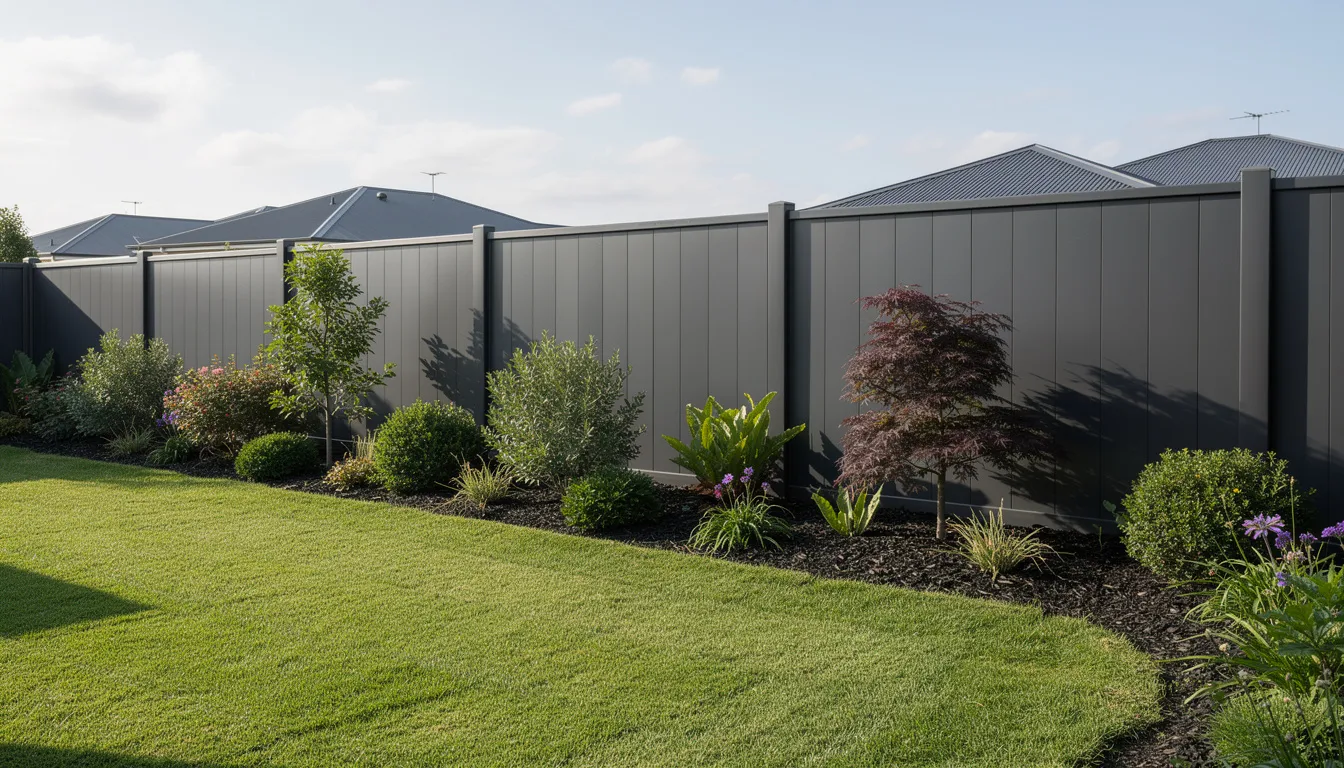
Steel panel fencing has grown increasingly popular in windy, low maintenance coastal areas like Paraparaumu Beach and Waikanae Beach. These fences handle Kapiti’s gales well and require minimal maintenance compared to wood fences.
Typical Kapiti costs for steel panel fencing:
- 1.8m standard panel: $180–$250 per metre installed
- 2.0m panel: $220–$280 per metre installed
- Premium colours or double-sided options: add $20–$40/m
The higher upfront cost compared to timber is offset by the fact that these fences require minimal maintenance—no painting, staining, or replacing rotten palings. However, coastal salt exposure may justify higher-grade coatings or heavier posts in very exposed locations, which can add to cost significantly.
Rural and Lifestyle Fencing
For properties in Reikorangi, Te Horo, Peka Peka rural blocks, and Ōtaki’s farming areas, practical stock containment matters more than privacy. These fencing solutions prioritise function over aesthetics.
Cost effective materials for rural properties:
- Basic post-and-wire stock fencing: $40–$70 per metre
- 7-wire with battens: $60–$90 per metre
- 2-rail timber post-and-rail: $90–$140 per metre
- 3-rail decorative post-and-rail: $120–$160 per metre
- Post-and-batten fencing: $80–$120 per metre
Gateways, strainer posts, and creek crossings add line-item costs that can surprise first-time lifestyle block owners. A properly braced gateway assembly might add $400–$800 to your project, depending on width and gate type.
Pool and Garden Feature Fencing
Pool fencing in New Zealand must meet specific Building Code requirements, which increases both materials and installation complexity. The regulations around pool fencing are strict—this isn’t an area for cutting corners.
Pool fencing costs in Kapiti:
- Standard aluminium pool fencing: $180–$280 per metre installed
- Semi-frameless glass: $350–$500 per metre
- Frameless glass panels: $450–$700 per metre
Modern slat or louvre fences used as feature screens around Kapiti decks and outdoor spaces often cost more per metre than basic boundary fences—typically $200–$350/m—due to more materials and precision installation work.
| Fence Category | Budget Option | Mid-Range | Premium |
|---|---|---|---|
| Residential boundary | Treated pine ($130–$170/m) | Colorsteel ($180–$250/m) | Cedar/hardwood ($220–$320/m) |
| Rural boundary | Post-and-wire ($40–$70/m) | Post-and-rail ($90–$140/m) | Post-and-rail with mesh ($140–$200/m) |
| Pool compliant | Aluminium ($180–$280/m) | Semi-frameless glass ($350–$500/m) | Frameless glass ($450–$700/m) |
| Decorative/feature | Timber slat ($180–$280/m) | Aluminium louvre ($250–$350/m) | Custom fencing ($300–$450/m) |
Key Factors That Influence Fence Cost in Kapiti
Your total cost depends on far more than just fence length. Local environment, site conditions, and design choices can easily swing a project by 30–50% in either direction. Understanding these factors affect your quote helps you make informed decisions and avoid budget blowouts.
Material Choice
The type of fencing materials you select creates the biggest single variable in your budget.
Treated pine remains the cost effective option for most residential boundaries, with H3.2 treatment suitable for above-ground use and H4/H5 required where timber contacts soil. Expect to pay $75–$140 per metre for materials alone.
Hardwoods like macrocarpa or cedar offer superior durability in Kapiti’s humid, salty climate but cost 40–80% more than pine. These high quality materials can push material costs to $120–$200 per metre before installation.
Colorsteel/Colorbond panels range from $90–$180 per metre for materials, with weather resistant coatings that suit coastal conditions. Stainless steel fixings are essential near the coast—galvanised fasteners can fail within 5–10 years in salty air.
Aluminium and glass for pool fencing and decorative elements carry premium pricing but offer excellent durability against coastal conditions.
Fence Height and Design
Moving from a standard 1.5m fence to a taller fence at 1.8–2.0m adds material volume and labour time. Each additional height increment typically adds 15–25% to your total cost.
Design features that increase costs:
- Capping rails and decorative post caps
- Lattice or trellis top sections
- Double-sided “good neighbour” construction
- Acoustic cladding for noise reduction
- Decorative elements like scalloped tops
A taller fence requires more materials, stronger posts, and often deeper concrete footings—particularly important in Kapiti’s wind-exposed areas.
Terrain, Soil, and Access
Site conditions create some of the biggest cost variations between Kapiti properties.
Easy sites: Flat, well-drained sections in newer subdivisions around Paraparaumu North or Waikanae typically allow straightforward installation. Good vehicle access to the fence line keeps labour costs down.
Challenging sites: Steep or uneven sections in Paekākāriki or the hills above Raumati can add 20–40% to installation costs. Fencers may need to step posts down slopes, use longer posts, or build retaining walls before fencing.
Soil conditions: Sandy soils near beaches require deeper post holes (often 900mm+) and more concrete. Heavy clay can slow digging considerably. High water tables complicate concrete curing.
Access limitations: If there’s no vehicle access to your back boundary, materials must be carried by hand. Sections with lots of steps, established gardens, or narrow side access can increase labour hours substantially.
Labour Costs and Seasonal Demand
Wellington region trades typically charge higher hourly rates than many other New Zealand areas—often 10–20% above national averages. This reflects higher living costs and skilled workforce competition in the capital region.
Labor costs on the Kapiti Coast typically range from $50–$100 per hour depending on contractor experience and project complexity.
Seasonal considerations:
- Peak demand runs from late spring through summer (October–March)
- Off peak seasons in winter may offer better negotiating room
- Some contractors offer discounts during quieter months
- Weather delays are more common in winter but can occur year-round in Kapiti
Council and Legal Compliance
Local regulations add another layer to consider, particularly for boundary fences and pool fencing.
Kapiti Coast District Council requirements:
- Fences over 2m generally require building consent
- Pool fencing must meet strict Building Code requirements
- Fences on or near property boundaries may need neighbour consultation under the Fencing Act
- Fences close to roads or on corner sites may have height restrictions
Building consent fees typically run $200–$500, and engineer input for high or heavily loaded fences can add $300–$800 to your project.
The local council GIS mapping tools can help you confirm property boundaries before starting work—an essential step that many homeowners overlook.
Estimating Your Fence Budget for a Kapiti Property
A structured approach prevents the nasty surprise of a project running 30–50% over budget. Let’s walk through a practical method using a typical 30–60m boundary fence in Paraparaumu or Waikanae as our reference.
Step-by-Step Budget Process
Step 1: Measure your boundaries
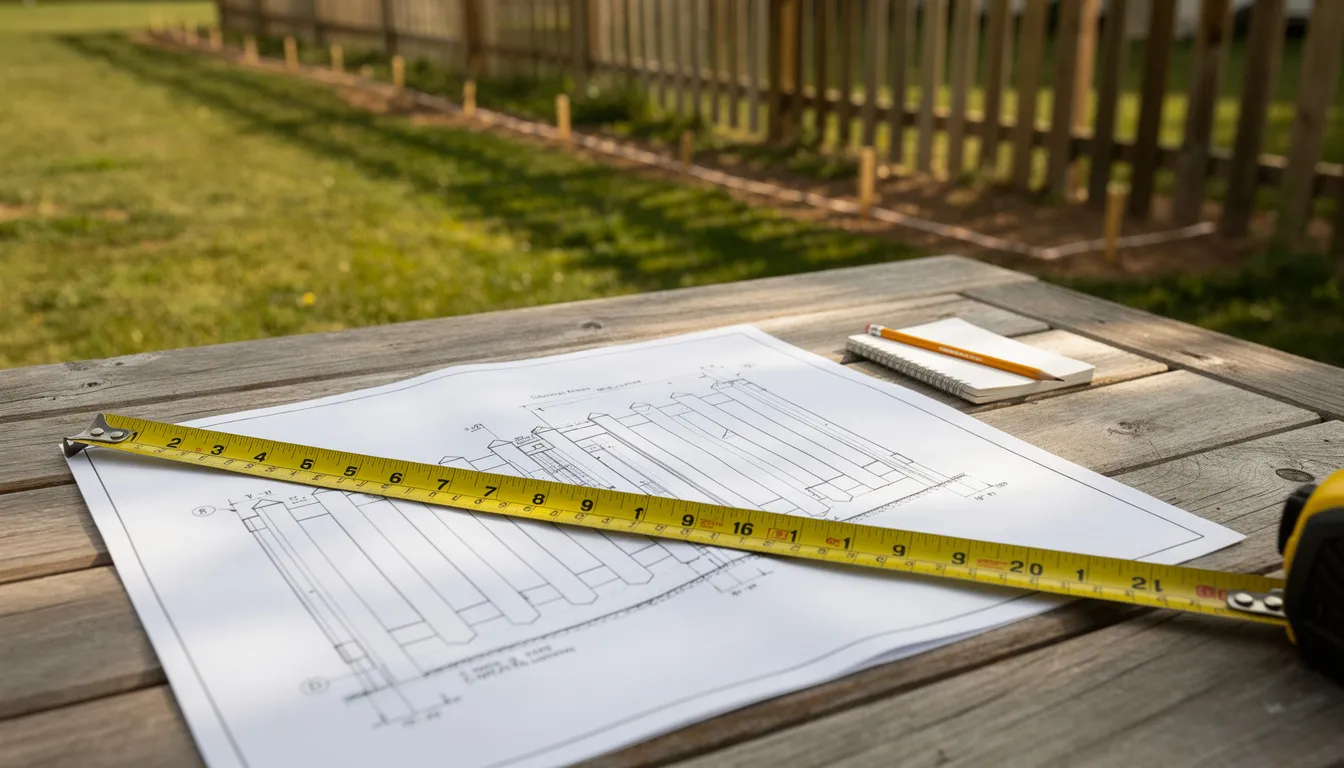
Use a tape measure, your title plan, or the Kapiti Coast District Council’s GIS mapping tool to establish your fence length. Measure each section separately and note any corners, gates, or obstacles.
Step 2: Define your fence purpose
What’s the fence actually for? Your answer shapes material choice:
- Privacy from neighbours: 1.8m solid timber or Colorsteel
- Containing pets: 1.5m with appropriate gaps
- Pool safety: Compliant aluminium or glass
- Stock containment: Post-and-wire or post-and-rail
- Noise reduction: Acoustic-rated panels or dense timber
Shortlist 1–2 suitable materials based on your priorities and the fencing options that suit your property.
Step 3: Apply realistic per-metre costs
Use the Kapiti-specific guides from earlier in this article to build your materials and labour estimate. For a residential boundary fence, multiply your total length by the appropriate per-metre rate.
Step 4: Add gates and extras
Don’t forget these common additional costs:
- Pedestrian gate: $300–$600 installed
- Single vehicle gate: $500–$1,200 installed
- Double driveway gates: $1,000–$2,500 installed
- Demolition and removal of existing fence: $15–$40 per metre
- Green waste removal and tip fees: $150–$400
Step 5: Include contingency
Budget 10–15% contingency for hidden issues: underground services, rotten boundary posts that need replacing, extra concrete for difficult soil, or minor design changes during construction.
Worked Example: 40m Timber Paling Fence in Paraparaumu
Here’s how a typical project estimate might look for a straightforward residential boundary fence:
| Item | Calculation | Cost |
|---|---|---|
| 40m treated pine paling fence, 1.8m high | 40m × $180/m | $7,200 |
| One pedestrian gate | Lump sum | $450 |
| Remove existing fence (20m section) | 20m × $25/m | $500 |
| Tip fees and waste removal | Lump sum | $250 |
| Subtotal | $8,400 | |
| Contingency (12%) | $1,000 | |
| Total estimated cost | $9,400 |
This gives you a realistic estimate for budgeting and comparing against contractor quotes.
Cross-Checking Your Estimate
A fence cost calculator NZ tool can help validate your manual calculations, though most aren’t Kapiti-specific. Tools from companies like Wellington Fence Company or similar providers let you input length, height, and material to generate ballpark figures.
Keep in mind that online calculators typically show national averages. Kapiti’s coastal conditions and Wellington-region labour rates often push actual costs 10–20% higher than generic calculator outputs.
Keep detailed notes and sketches of your fence line, including:
- Total length of each section
- Location of gates
- Any slopes or level changes
- Access points for vehicles
- Existing structures to work around
This documentation helps local fencing contractors quote quickly and accurately when they visit for a site assessment.
Working with Kapiti Fencing Contractors (and Keeping Costs Under Control)
There’s real value in using experienced local fence builders who understand Kapiti’s wind loads, salt exposure, and variable soil conditions. A professional fencing company familiar with local conditions can prevent costly mistakes that general handymen might make.
What to Ask for When Requesting Quotes
Get at least two detailed written quotes from Kapiti-based contractors. Each quote should itemise:
- Materials (timber grade, post size, panel specifications)
- Labour and installation costs
- Gates (including hardware and hinges)
- Demolition and removal of existing fence
- Waste removal and tip fees
- Any earthworks or preparation required
Confirm these technical details:
- Timber treatment level (H3.2, H4, or H5)
- Post dimensions (90×90mm vs 100×100mm makes a difference in wind resistance)
- Post depth and concrete specifications
- Fastener type (galvanised vs stainless for coastal areas)
- Warranty coverage on workmanship and materials
Ask for approximate start and completion dates, plus factors that might cause delays—material availability issues, weather, or other committed projects.
Comparing Quotes Fairly
Don’t choose solely on lowest price. A quote that’s 20% cheaper might be cutting corners on post depth, timber grade, or concrete volume. These shortcuts become expensive problems within 5–10 years.
When comparing, check whether all work is included:
- Site preparation and clearing
- Old fence removal and disposal
- Reinstatement of gardens, lawns, or paths disturbed during installation
- Any required permits or consent applications
Read online reviews and ask for references from recent Kapiti projects. A fencing company with a solid local reputation is worth potentially saving money on avoidance of future repair costs.
Practical Cost-Control Tips for Kapiti
Do some DIY prep work:
- Clear vegetation along the fence line before contractors arrive
- Remove old shrubs, stored materials, or garden structures
- Ensure clear vehicle access to the work area if possible
Many homeowners find that a few hours of preparation work can save $200–$500 on their overall cost.
Prioritise your spending:
- Use premium materials and custom fencing details on street-facing front sections that boost curb appeal
- Opt for simpler, cost effective option materials on less visible back and side boundaries
- Consider composite materials or aluminium for high-visibility areas and treated pine elsewhere
Combine projects for economies of scale:
- Talk to neighbours about sharing a boundary fence upgrade
- Add a short retaining wall or garden edging during the same project
- Install all gates at once rather than adding them later
Timing matters:
- Book during off peak seasons (May–August) for potentially better rates
- Give contractors 3–4 weeks lead time for better scheduling flexibility
- Avoid rushing—urgent jobs often attract premium pricing
Deposits and Payment Terms
In 2026–2027, most professional installation arrangements work like this:
- Deposit (typically 20–40%): Covers material purchase
- Progress payment (on larger jobs): When major milestones are reached
- Final payment: After completion and your inspection
Insist on written agreements covering:
- Payment schedule tied to specific milestones
- Complete scope of work with specifications
- How variations or changes will be priced
- Warranty terms and conditions
A reputable fencing company won’t hesitate to provide clear documentation. If someone resists putting details in writing, that’s a red flag.
Long-Term Value, Maintenance and Repair Costs in Kapiti’s Climate
Kapiti’s coastal environment—salt air, high winds, intense UV, and occasional flooding in low-lying areas—shortens fence lifespans compared to sheltered inland sites. Considering maintenance requirements upfront can save substantial money over the entire fence lifecycle.
Expected Lifespans
Under normal Kapiti conditions with appropriate maintenance:
| Fence Type | Typical Lifespan | With Excellent Maintenance |
|---|---|---|
| Treated pine paling | 15–20 years | 20–25 years |
| Cedar or macrocarpa | 20–30 years | 30–40 years |
| Colorsteel/Colorbond | 25–35 years | 35–45 years |
| Rural post-and-rail | 15–25 years | 25–30 years |
| Aluminium pool fencing | 30–40 years | 40+ years |
Proper installation (adequate post depth, quality concrete, appropriate fixings) and consistent maintenance dramatically extend these ranges. Cutting corners during the fence installation process often halves the effective lifespan.
Ongoing Maintenance Needs and Costs
Timber fences require regular attention:
- Staining or painting every 3–5 years in exposed Kapiti locations
- Less maintenance is needed for sheltered sections, more for west-facing fences
- Staining costs approximately $15–$30 per metre if done professionally, or $5–$10 per metre DIY
- Annual inspection for loose palings, rotten posts, or wind damage
Steel and aluminium fences need less work but aren’t maintenance-free:
- Periodic washing (every 6–12 months) to remove salt buildup
- Touch-up paint for any scratches or chips
- Annual check of fixings and gate hardware
- Low maintenance overall but consistency is key
Post-storm repairs are common in Kapiti:
- Replacing individual palings: $50–$150 per repair visit plus materials
- Straightening leaning posts: $100–$300 per post
- Major storm damage repairs: $500–$2,000+ depending on extent
Budget roughly 1–2% of your original fence cost annually for maintenance and minor repairs. A $8,000 fence should have $80–$160 per year set aside for upkeep.
The Value Proposition
Investing slightly more upfront often reduces lifetime costs:
- Better timber grades resist rot longer in Kapiti’s humid climate
- Deeper posts (900mm+ in exposed areas) prevent wind-induced leaning
- Stainless fixings last 3–4 times longer than galvanised in salty air
- Quality concrete mix prevents post movement in sandy soils
From a property value perspective, well-built fencing enhances resale appeal in Kapiti suburbs where buyers value privacy from SH1 traffic noise, the railway line, or neighbouring properties. Quality installations can recoup 50–70% of cost at resale through improved curb appeal and functional outdoor space.
Seasonal Maintenance Checklist for Kapiti Fences
Spring (September–November):
- Inspect entire fence for winter storm damage
- Tighten loose fixings and replace missing palings
- Clear vegetation growing against or through fence
Summer (December–February):
- Apply stain or paint to timber fences if due
- Check gate latches and hinges
- Wash salt deposits from steel and aluminium sections
Autumn (March–May):
- Clear leaves and debris from fence base
- Check drainage around posts
- Inspect for early signs of rot or rust
Winter (June–August):
- Monitor after major storms
- Keep vegetation trimmed to reduce wind loading
- Plan any major repairs or replacements for spring
Frequently Asked Questions (FAQs) About Fence Cost Kapiti
These questions cover additional details that Kapiti homeowners often ask when planning their home improvement project.
How much does it typically cost to fence a standard Kapiti section?
For a typical 600–800m² residential section with 40–60m of boundary fencing, expect to pay between $6,000 and $14,000 for a complete new fence using mid-range materials like treated pine or Colorsteel.
A 50m treated pine paling fence at 1.8m height would typically cost $8,000–$11,000 including a pedestrian gate and removal of the old fence. Colorsteel for the same length runs $9,500–$14,000. These figures assume reasonable access and relatively flat terrain.
Very large fence projects over 80–100m may benefit from modest economies of scale. Short runs under 20m often cost more per metre because fixed setup and travel costs are spread over less length.
Do I need my neighbour to share the cost of a new boundary fence in Kapiti?
Under the Fencing Act 1978, adjoining property owners generally share the cost of an “adequate” boundary fence. “Adequate” typically means a fence that marks property boundaries and keeps out stock—usually a basic post-and-wire or simple timber fence in urban areas.
If you want something beyond “adequate”—a taller fence, premium materials, or decorative elements—you can only ask your neighbour to contribute toward the adequate fence cost. You pay the difference for any upgrades.
Before starting work, serve a written Fencing Notice on your neighbour describing the proposed fence and cost implications. This gives them 21 days to respond. Many neighbours negotiate informally and reach agreement without formal notices, but having the process documented protects both parties.
For commercial properties or unusual boundary situations, consider getting legal advice before proceeding.
Are there extra costs for fences near the coast in Kapiti?
Yes. Exposed coastal sites from Paekākāriki through to Ōtaki Beach typically require:
- Heavier posts (100×100mm instead of 90×90mm) for wind resistance
- More concrete per post (deeper holes, larger footings)
- Stainless steel fasteners instead of galvanised (adds $3–$8 per metre)
- Higher-grade timber treatment (H4/H5 for ground contact in salt-laden soil)
- Potentially engineering input for very exposed or high fences
These coastal factors typically add 10–25% to installation costs compared to sheltered inland sites. For a 40m fence, that might mean $800–$2,000 in additional costs.
Regional differences within Kapiti matter too—a fence in central Paraparaumu faces less salt exposure than one at Waikanae Beach, even though they’re only a few kilometres apart.
How long does a new fence installation normally take in Kapiti?
A straightforward 30–40m residential boundary fence typically takes 1–3 days with a professional crew. More complex projects might require:
- Multi-material fences: 3–5 days
- Steep or difficult terrain: Add 1–2 days
- Retaining walls included: Add 2–4 days
- Pool fencing with compliance: 2–4 days including inspection scheduling
Weather delays are common on the Kapiti Coast. Strong winds make panel installation dangerous, and heavy rain turns clay sites into mud. Most contractors build weather contingency into their scheduling.
Material availability can also extend timeframes. Special orders for custom fencing, specific Colorsteel colours, or hardwood timber may add 2–4 weeks to the project timeline.
Can I reduce fence costs by doing part of the work myself?
DIY installation can save 30–50% of total cost if you have the skills, tools, and time. However, there are important limitations to consider.
Tasks suitable for capable DIYers:
- Clearing vegetation and preparing the fence line
- Removing old fencing and disposing of materials
- Painting or staining completed timber fences
- Basic post hole digging on flat, accessible sites
- Installing simple post-and-rail rural fencing
Tasks best left to professionals:
- Pool fencing (legal requirements demand certified installation)
- Boundary fences where Fencing Act compliance matters
- High or heavily loaded fences requiring engineering
- Steep or complex terrain installations
- Colorsteel panel installation (warranty often requires professional fitting)
The realistic estimate of DIY savings must factor in tool costs ($500+ for post hole borer, levels, concrete mixer), time investment, and the risk of errors. Professional installation typically includes warranties that DIY installation voids. Correction costs for DIY mistakes average $1,000+ according to industry data.
For many homeowners, a middle ground works well: do the site preparation and old fence removal yourself, potentially saving money on labour, then have professionals handle the new fence installation process.
What legal considerations should I be aware of before installing a fence in New Zealand?
Boundary issues are a primary legal consideration when installing a fence in New Zealand. The Fencing Act of 1978 outlines the obligations of property owners regarding dividing fences. Additionally, local council regulations can significantly impact fencing projects, and obtaining resource consent may be necessary for certain types of fences in specific areas. Engaging with neighbors early in the planning process is also recommended to prevent disputes.
What are the most common fencing materials used in Kapiti?
The most popular fencing materials in Kapiti include treated pine timber, vinyl (PVC), aluminum, composite wood (WPC), and chain-link fences. Treated pine is the most economical option, while cedar, composite wood, and aluminum tend to be more expensive but offer greater durability and minimal maintenance.
How much does timber fencing typically cost in Kapiti?
Timber fencing costs between $100 and $200 per meter, with treated pine being preferred for its durability against coastal conditions. Higher-grade treatments and hardwood options like cedar can increase costs but provide longer lifespans.
What are the benefits of ColorSteel® fencing in Kapiti?
ColorSteel® fencing is highly recommended for Kapiti due to its ability to withstand winds up to 170 km/h and its minimal maintenance requirements. It is a durable steel panel option suitable for the windy coastal environment.
How much does vinyl fencing cost, and what are its advantages?
Vinyl fencing typically costs between $150 and $250 per meter. It is durable, requires minimal maintenance, and is resistant to rot, rust, and insect damage, making it a practical long-term fencing solution.
What should coastal property owners consider when choosing fencing materials?
Coastal properties should prioritize rust-resistant materials such as aluminum or powder-coated steel to prevent rot caused by high moisture and salt-laden air. Local experts often recommend treated timber or composite materials for their weather resistance and durability.
How much do gates cost for fencing projects in Kapiti?
Basic pedestrian gates range from $200 to over $1,000, depending on the material and design. Custom gates or larger vehicle gates can cost more.
What factors influence the overall fencing costs in Kapiti?
Fencing costs depend on materials, labor, fence height, fence length, site conditions (such as soil type and terrain), and additional features like gates or decorative elements. Narrow driveways or difficult access can add 15–25% to labor costs due to manual material transport.
What is the typical range for fencing costs per meter in the Kapiti region?
Prices for fencing materials and installation typically range from $50 to $350 per meter in Kapiti, depending on fence type and complexity.
How do labor costs affect fencing installation prices?
Labor costs in New Zealand generally range from $60 to $100 per hour and can vary based on installation complexity, terrain, and regional rates.
Can I reduce fencing costs by purchasing materials in bulk or scheduling during off-peak seasons?
Yes, purchasing materials in bulk can lead to discounts and lower overall costs. Scheduling your fencing project during off-peak seasons can also result in reduced prices for materials and labor.
What maintenance is required for different fencing materials?
Wooden fences require regular maintenance such as staining or painting to prevent weather-related damage. Vinyl, aluminum, and composite fences require minimal maintenance, making them cost-effective over time.
Does Fencing Kapiti provide custom fencing solutions and free quotes?
Yes, Fencing Kapiti offers custom fencing designs tailored to individual property needs, focusing on durability and aesthetics. They provide free quotes and detailed timelines to ensure a hassle-free fencing project experience.
What types of fencing services are available in Kapiti?
Fencing services in Kapiti include timber fencing, Colorbond/Colorsteel steel panel fencing, pool fencing, rural fencing, and custom fencing solutions designed to enhance property value and curb appeal.
How much does it cost to remove an old fence in Kapiti?
Removal costs for an old fence typically range from $3 to $10 per linear meter, depending on fence type and disposal requirements.
What are some cost-effective fencing options for large areas or commercial properties?
Chain-link fences are a cost-effective and durable option for large areas and commercial properties, with prices approximately between $50 and $100 per meter.
How do additional features affect fencing costs?
Adding gates, decorative elements, or specialized finishes can increase the total fencing cost, so it is important to factor these into your budget planning.
What is the average lifespan of different fencing materials in Kapiti’s coastal climate?
Treated pine fences typically last 15–25 years with proper maintenance, while ColorSteel® and aluminum fences can last 25–40 years or more due to their resistance to coastal weathering.
Are there any special considerations for fence installation on Kapiti’s coastal soils?
Yes, sandy soils and high winds typical of the Kapiti Coast may require deeper post holes, stronger bracing, and more concrete to ensure fence stability and longevity.
Conclusion
Fencing on the Kapiti Coast requires careful consideration of unique local factors such as coastal winds, soil conditions, and regional regulations. By understanding the typical fence cost Kapiti ranges, material options, and installation challenges, homeowners can make informed decisions that balance durability, aesthetics, and budget. Whether you choose cost-effective treated pine timber, low-maintenance Colorsteel panels, or custom fencing solutions, investing in quality materials and professional installation ensures a fence that stands strong against Kapiti’s elements and adds lasting value to your property. Remember to obtain multiple quotes, plan for ongoing maintenance, and engage with local experts to achieve the best outcome for your fencing project. With proper planning and execution, your new fence will enhance your outdoor space’s security, privacy, and curb appeal for years to come.